

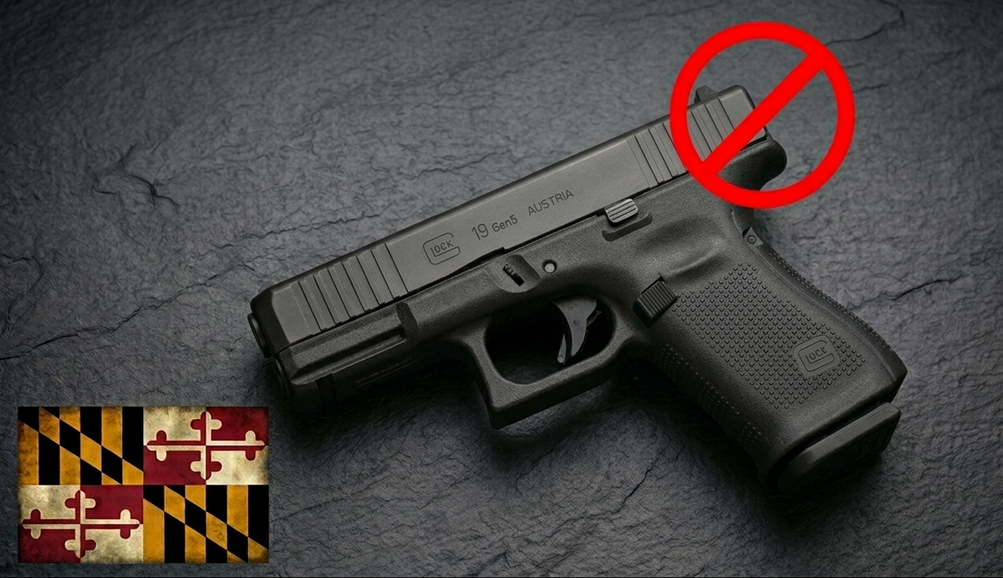
Are Glock Bans the Next Front in the Second Amendment Debate?
Posted by DOT on Jul 6th 2026
Glock Bans Expand Beyond California as Three States Target America's Most Popular Handguns
Within the span of a single week, lawmakers in three states signed legislation aimed at restricting some of the most commonly owned handguns in America.
Maryland, Connecticut, and New York have each adopted measures that target Glock pistols and similar handgun designs, marking a significant expansion of a regulatory approach that until recently was largely associated with California.
Supporters argue these laws are designed to address illegal machine gun conversion devices. Opponents contend they represent a broader effort to limit access to firearms that millions of Americans legally own for self-defense, training, competition, and recreational shooting.
This article breaks down what these new laws do, why they are drawing legal challenges, and what they could mean for gun owners nationwide.
Three States Adopt Similar Restrictions
Although the laws differ in wording, they share a common objective: restricting future access to widely owned semiautomatic handguns.
Maryland
Maryland's law creates a new category known as a "machine gun convertible" pistol.
Critics argue the definition is broad enough to encompass many Glock and Glock-style handguns currently sold throughout the United States.
Connecticut
Connecticut's legislation follows a similar path.
The measure restricts:
- Future manufacture of affected handguns
- Future sales of affected handguns
- Importation of certain handgun models
- Additional unfinished frame and receiver regulations
New York
New York's law goes a step further by making the sale or transfer of a so-called "convertible pistol" a Class D felony.
Taken together, these measures represent one of the most aggressive attempts in recent years to regulate popular handgun platforms.
The Conversion Device Debate
Supporters of the legislation frequently describe the laws as targeting "DIY machine guns" and illegal conversion devices.
However, opponents argue that existing federal laws already address these concerns.
Federal law currently prohibits:
- Possession of machine gun conversion devices
- Manufacturing conversion devices
- Selling conversion devices
- Converting semiautomatic firearms into fully automatic firearms
Violations can carry penalties of up to ten years in prison.
Additionally, many states already prohibit possession of these devices independently of federal law.
Critics therefore question whether additional handgun bans are necessary when conversion devices themselves are already heavily regulated.
For many Second Amendment advocates, the concern is that lawmakers are shifting the focus away from criminal misuse and toward restricting ownership of firearms commonly possessed by law-abiding citizens.
Why Glock Pistols Are Being Discussed
Glock handguns remain among the most popular firearms in the country.
They are widely used by:
- Civilian gun owners
- Law enforcement agencies
- Competitive shooters
- First-time firearm purchasers
- Individuals seeking a firearm for personal protection
Their reputation for reliability, affordability, and simplicity has helped make them one of the most recognizable handgun platforms in America.
Opponents of these laws argue that targeting firearms with such widespread ownership raises significant constitutional concerns.
Recent Supreme Court decisions have emphasized that firearms commonly owned for lawful purposes receive substantial protection under the Second Amendment.
In Smith & Wesson Brands v. Estados Unidos Mexicanos, the Supreme Court acknowledged that firearms such as the AR-15 are among the most popular rifles in the nation, reinforcing the principle that common ownership matters when evaluating constitutional protections.
Gun rights organizations argue that the same reasoning could ultimately apply to popular handgun platforms.
Legal Challenges Are Already Underway
The legal fight has already begun.
The NRA has filed litigation challenging Maryland's law and previously initiated a lawsuit against California's restrictions.
Additional lawsuits may follow in Connecticut and New York.
Opponents believe these cases could become important tests of how courts apply the Supreme Court's Bruen standard, which requires firearm regulations to align with the nation's historical tradition of firearm regulation.
Questions likely to be considered include:
- Are these firearms commonly owned for lawful purposes?
- Is there a historical tradition supporting bans on such handguns?
- Can states prohibit firearms that millions of Americans already legally possess?
The answers may shape firearm policy far beyond these three states.
Potential Impact on Gun Owners and Dealers
The effects of these laws extend beyond individual ownership.
Many firearm retailers rely heavily on Glock sales and accessories.
Industry observers note that restrictions on one of the nation's most popular handgun brands could create challenges for:
- Independent gun stores
- Firearm distributors
- Gunsmiths
- Accessory manufacturers
- Training companies
For consumers, the laws may reduce choices among some of the most established and widely supported handgun platforms currently available.
Opponents argue that restricting access to common firearms moves the conversation beyond conversion devices and into broader debates about which firearms Americans should be allowed to own at all.
Final Thoughts
The recent actions taken by Maryland, Connecticut, and New York represent a notable shift in the firearm policy landscape.
While supporters describe these measures as efforts to combat illegal modifications, critics see them as the latest attempt to restrict access to some of the most commonly owned handguns in America.
With lawsuits already underway and additional challenges expected, the courts will likely play a major role in determining whether these laws can withstand constitutional scrutiny.
For many gun owners, the debate goes beyond Glock pistols themselves. It raises larger questions about whether states can prohibit firearms that millions of Americans rely on for self-defense, training, and lawful everyday use.
At DOT, we believe informed gun owners are empowered gun owners. As legislation and court decisions continue to shape the future of firearm ownership, staying educated remains just as important as having equipment you can trust.
Explore DOT and discover optics built for performance, reliability, and confidence when it matters most.