

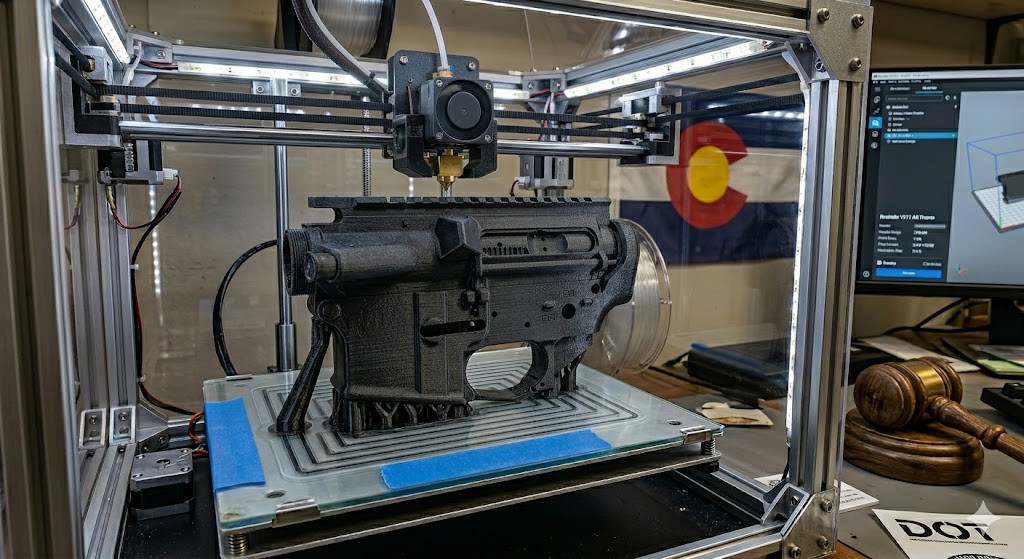
New Colorado Gun Law Targets 3D Printing and Home-Built Firearms
Posted by DOT on May 13th 2026
Colorado lawmakers have moved forward with another major firearms restriction, this time targeting home gun building and modern manufacturing technology. With the signing of House Bill 1144, the state is set to ban the use of 3D printers and certain computer-controlled tools for producing firearms and firearm components beginning July 1, 2026.
Supporters of the bill argue it is aimed at reducing so-called “ghost guns,” while critics say it criminalizes lawful home gunsmithing practices that have existed for decades.
This article breaks down what the new law does, what changed before it was signed, and what it could mean for gun owners in Colorado moving forward.
Colorado Expands Its Ghost Gun Restrictions
Jared Polis signed House Bill 1144 into law on May 4, expanding Colorado’s existing restrictions on unserialized firearms.
The new law specifically targets firearms and firearm components produced using:
- 3D printers
- CNC machines
- Other computer-controlled manufacturing systems
Importantly, the legislation defines manufacturing broadly, meaning it applies not only to traditional additive manufacturing (3D printing), but also subtractive manufacturing methods like desktop CNC machining.
For Colorado residents who legally build firearms or components at home, the change is significant.
What the Law Actually Prohibits
Beginning July 1, 2026:
- Manufacturing firearms with covered tools becomes illegal
- Producing firearm components through those methods is also prohibited
- The law applies to home-built firearm production methods previously considered lawful
The wording of the legislation appears broad enough that it may apply not only to complete firearm frames and receivers, but potentially smaller parts and accessories as well.
That means even printing or machining certain replacement components could fall into a legal gray area.
Earlier Versions Went Even Further
The version ultimately signed into law was narrower than early drafts.
Initial versions of HB 1144 included language that would have prohibited:
- Sharing digital design files
- Distributing firearm-related CAD files or code
- Transmitting manufacturing instructions online
Those provisions were later removed after concerns were raised over potential First Amendment issues.
Jared Polis reportedly indicated he would oppose legislation restricting the distribution of information itself, leading lawmakers to scale the bill back before final passage.
The Debate Around Home Manufacturing
The bill immediately drew strong reactions from both gun rights advocates and gun control organizations.
The National Rifle Association Institute for Legislative Action argued the law criminalizes a lawful form of personal firearm manufacturing that has existed in various forms for generations.
Meanwhile, Everytown for Gun Safety praised the bill, describing it as a step toward limiting the spread of privately manufactured firearms.
The disagreement reflects a growing national debate over where firearm regulation intersects with emerging technology.
What This Means for Gun Owners
For many firearm enthusiasts, hobbyists, and home builders, the law represents more than just a restriction on technology.
Critics argue that:
- Home gunsmithing has long been a legal American tradition
- Modern tools are simply newer versions of older manufacturing methods
- The law targets lawful hobbyists rather than violent criminals
Others are concerned about how broadly the law could ultimately be interpreted and enforced, especially regarding individual parts and accessories.
At the same time, supporters maintain the law is necessary to address firearms produced outside traditional commercial channels.
A Growing Trend in Firearm Regulation
Colorado’s new law is part of a broader trend where states are increasingly focusing on:
- Ghost guns
- Unserialized firearms
- Digital firearm design files
- Home manufacturing technology
As 3D printing and desktop CNC equipment become more accessible, lawmakers across the country are paying closer attention to privately manufactured firearms and how existing laws apply to them.
That debate is unlikely to slow down anytime soon.
Final Thoughts
House Bill 1144 marks another major step in the evolving debate over firearm technology and personal firearm manufacturing. While supporters see it as a public safety measure, opponents view it as a direct restriction on lawful home gunsmithing and self-manufacturing practices that have historically been legal in the United States.
The removal of the bill’s earlier speech-related provisions also highlights how these debates increasingly involve not just firearm rights, but questions surrounding technology, information sharing, and constitutional protections more broadly.
As July 2026 approaches, Colorado gun owners and home builders will be watching closely to see how the law is interpreted and enforced in practice.
At DOT, we believe responsible firearm ownership starts with knowledge, preparation, and dependable equipment. Whether regulations shift or technology evolves, reliability and performance still matter.
Explore DOT and see what modern optics should be.