

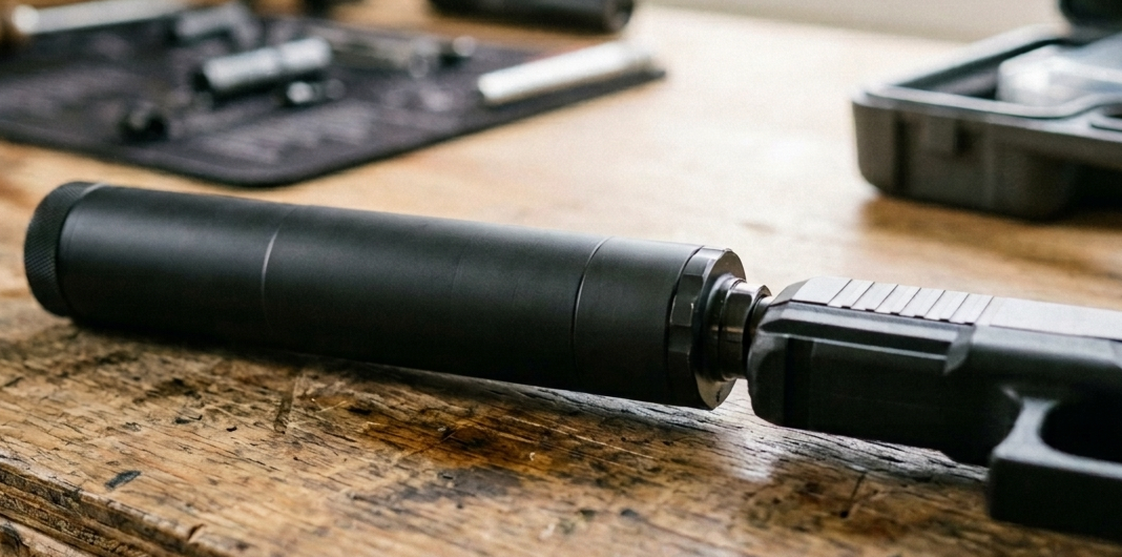
Suppressor Export Regulations Modernized Under New Proposal
Posted by DOT on Aug 4th 2026
Suppressor Export Reform Moves Forward After Years of Advocacy
Firearm suppressors long stood out as a key exception to broader federal export reforms. While most commercially available firearms and accessories were shifted under a more practical regulatory framework, suppressors were left behind... Until now.
On July 22, the U.S. Departments of State and Commerce released joint Interim Final Rules that would move most commercially available suppressors out of the State Department's stricter export controls and under the Commerce Department's oversight.
While suppressor exports will still require licensing and government review, supporters say the change reduces unnecessary bureaucracy, better reflects modern suppressor technology, and benefits both American manufacturers and lawful firearm owners.
This article breaks down what changed, why suppressors were treated differently for so long, and what the reform could mean going forward.
What Is Export Reform?
The federal government's Export Reform Initiative began during President Trump's first administration with the goal of modernizing how firearms and related products are regulated when exported overseas.
Rather than treating every firearm-related product the same, the initiative sought to distinguish between:
- Military technologies that require the highest level of oversight
- Commercially available products commonly owned by civilians
The guiding philosophy was often described as building "a taller fence around a smaller yard," allowing regulators to focus resources on genuinely sensitive military technologies while reducing unnecessary restrictions on widely available commercial products.
Why Were Suppressors Left Out?
Although many firearms, ammunition, and accessories were moved to the Commerce Department years ago, suppressors remained under the State Department's Directorate of Defense Trade Controls (DDTC).
The NRA and other Second Amendment organizations argued this never aligned with the purpose of Export Reform.
Their position was based on several key points:
- Suppressors have been commercially available for well over a century.
- Their design is widely understood around the world.
- They do not increase a firearm's lethality.
- Millions of civilians legally own suppressors worldwide.
- Many allied countries regulate suppressors less restrictively than the United States.
Supporters argued there was little justification for treating commercially available suppressors like sensitive military technology.
What Changed?
The new Interim Final Rules acknowledge many of those same arguments.
According to the State Department, suppressors no longer provide the kind of unique military or intelligence advantage that justifies the highest level of export regulation.
Officials cited several reasons for the change, including:
- Increased civilian use around the world
- Growing numbers of foreign manufacturers
- Easier access to manufacturing knowledge and technology
- The widespread understanding of suppressor design
As a result, most commercially available suppressors would now fall under Commerce Department oversight rather than DDTC regulations.
What Does This Mean?
One important point is that suppressors are not becoming unregulated export items.
Exports will still:
- Require government licensing
- Undergo case-by-case review
- Be subject to national security considerations
- Remain regulated under federal export laws
The reform primarily changes which federal agency oversees the process, rather than eliminating oversight altogether.
Potential Benefits
Supporters believe the rule change could provide several practical advantages.
For manufacturers:
- Reduced regulatory complexity
- More competitive access to international markets
- Clearer export procedures
For firearm owners:
- Easier temporary export of suppressors for overseas hunting or sporting activities
- Reduced administrative burdens for certain international travel
- Greater consistency with the broader Export Reform framework
Many within the firearms industry also see the change as long-overdue recognition that commercially available suppressors should not be regulated the same way as specialized military equipment.
Public Comment Period
The Interim Final Rules are currently open for public comment through August 24, 2026.
During this period, manufacturers, firearm owners, industry groups, and members of the public can submit feedback before the rules become final.
As with many firearm-related regulatory changes, supporters and opponents are both expected to weigh in during the comment process.
Final Thoughts
The latest suppressor export reform represents another step in the ongoing effort to modernize federal firearms regulations.
Rather than removing oversight altogether, the changes recognize that commercially available suppressors no longer fit the same regulatory category as highly sensitive military technology. For many in the firearms industry, it's a practical adjustment that better reflects how suppressors are manufactured, owned, and used around the world.
While the proposal primarily affects export regulations, it also reflects a broader trend toward reevaluating older firearm policies through a more modern lens. Whether additional reforms follow remains to be seen, but supporters view this as another example of reducing unnecessary regulatory burdens without compromising legitimate national security concerns.
At DOT, we believe firearm owners deserve clear, practical regulations that respect both constitutional rights and responsible ownership. As laws and policies continue to evolve, staying informed is just as important as having equipment you can trust.
Explore DOT and discover optics built for performance, reliability, and confidence in every shooting environment.