

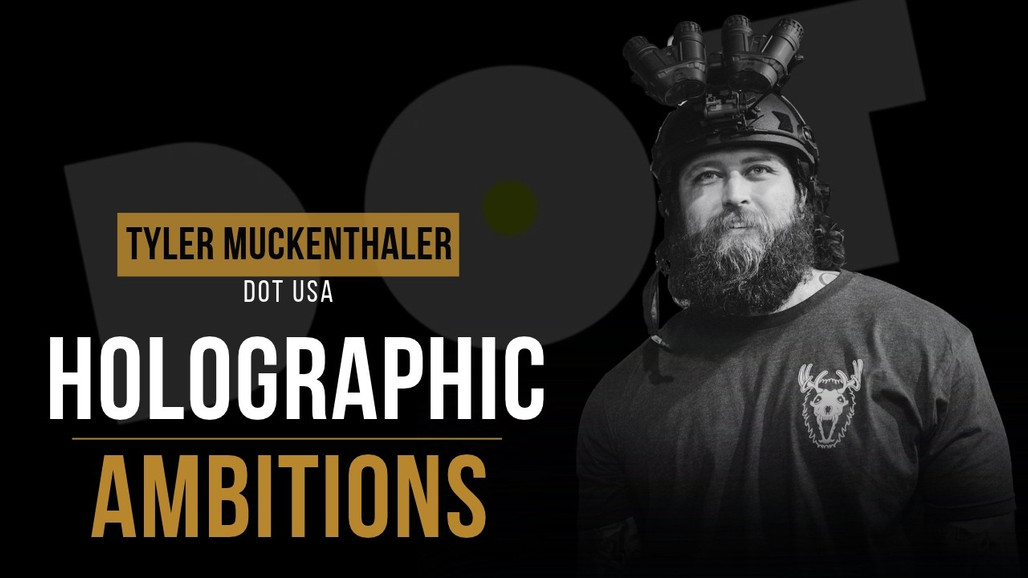
DOT Discusses Future Optics, Product Innovation, and Brand Vision on Whiskey and Windage
Posted by DOT on Nov 11th 2026
DOT Discusses Future Product Releases, Innovation, and the Vision Behind the Brand
As DOT continues to establish itself in the optics industry, the company's focus extends beyond its current product lineup. In a recent appearance on the Whiskey and Windage podcast, Tyler from DOT sat down to discuss the company's long-term vision, upcoming product developments, manufacturing challenges, and what he hopes DOT will bring to the broader firearms industry.
From building an ecosystem around the EHS1 holographic sight to encouraging more competition and innovation among established optics manufacturers, the conversation offered a closer look at where DOT is headed and what customers can expect in the coming years.
Here's a breakdown of some of the biggest takeaways from the discussion.
Building an Ecosystem Around the EHS1
Rather than expanding into every corner of the optics market, DOT plans to remain focused on its core strengths while building out a more complete product ecosystem.
The EHS1 holographic sight will remain the centerpiece of the brand, serving as the foundation for future product development.
That strategy includes:
-
Expanding the lineup of mounts and risers
-
Developing additional products within the holographic optics space
-
Focusing more heavily on low-light applications
-
Building complementary products around the EHS1 platform
The goal is to give customers more options without losing sight of what makes DOT different.
During the conversation, Tyler also hinted at several upcoming developments that are expected to be revealed over the next few months, with additional products and hands-on opportunities planned around SHOT Show.
While specific details remain under wraps, the direction is clear: DOT wants to build a recognizable ecosystem centered around holographic optics and the applications where they excel.
Upcoming Products and Production Challenges
One of the more interesting parts of the discussion centered on the challenges manufacturers face when bringing new products to market.
SHOT Show is an opportunity for companies to showcase prototypes, generate excitement, and give customers a glimpse of what's coming. However, moving from a prototype to full-scale production isn't always straightforward.
Engineering complications, manufacturing adjustments, and production capacity can all affect release timelines.
Tyler acknowledged that DOT has experienced some of these challenges firsthand, with a previously teased product taking longer than initially projected.
However, he also emphasized an important distinction between showcasing a prototype and accepting customer orders.
DOT does not want to take customers' money for products that aren't reasonably close to shipping.
That commitment includes avoiding lengthy preorder periods where customers are left waiting without meaningful updates.
For customers, that means:
-
More realistic product release expectations
-
No taking preorders for products without a reasonable shipping timeline
-
A greater emphasis on production readiness before accepting orders
-
Continued efforts to improve communication and transparency
Tyler also acknowledged that production capacity is being increased, with the goal of getting more products into retailers and into customers' hands.
Five-Year Vision: Driving Innovation in the Optics Industry
When asked where he wants DOT to be five years from now, Tyler offered an answer that goes beyond market share or sales numbers.
The ultimate goal is to help drive innovation throughout the optics industry.
DOT recognizes that it may not immediately compete with the largest established manufacturers in terms of overall market share. However, the company wants to challenge existing expectations and encourage other manufacturers to rethink what they're offering consumers.
The philosophy behind that approach is simple:
More competition creates more innovation.
And more innovation ultimately benefits the customer.
As Tyler explained, DOT entered the market wanting to create something different and encourage shooters to consider alternatives they may not have previously considered.
Ideally, the company wants to become known as a brand that helped push the industry forward, even if that means inspiring competitors to develop better products of their own.
In the long run, DOT hopes to become a household name in the Second Amendment community while establishing itself as both a product staple and a recognizable brand within the industry.
Why More Competition Benefits Consumers
One of the recurring themes throughout the conversation was the importance of competition.
For years, established manufacturers have dominated much of the optics market. While those companies have built strong reputations, new competitors entering the space can challenge the status quo.
That competition can lead to:
-
Better product development and technological improvements
-
More choices for consumers
-
Increased pressure on established manufacturers to innovate
-
Better value and more competitive pricing
-
New approaches to optics design and functionality
As the podcast hosts pointed out, competition doesn't necessarily mean every product becomes cheaper. Sometimes it means consumers get substantially better products for the same price.
Either way, customers benefit from having more options.
DOT hopes to play a role in creating that environment by introducing new ideas and encouraging other manufacturers to keep improving.
Tyler's Top Five Firearms
The conversation wrapped up with a more personal discussion, as Tyler was asked to name five firearms he would keep to cover his preferred types of shooting.
His selections leaned toward reliability, proven performance, and a few personal favorites.
His picks included:
-
Glock 17: His preferred handgun choice, citing its reliability and widespread reputation.
-
M16: A classic rifle that Tyler appreciates for its durability and ability to stand the test of time.
-
Geissele Super Duty: A 5.56 rifle he personally uses and appreciates for its reliability, functionality, and price point.
-
6mm ARC: A cartridge and rifle platform he finds particularly interesting for longer-range shooting.
-
HK MP5: A classic firearm that made the list for its combination of aesthetics, performance, and overall appeal.
While Tyler acknowledged that his selections might be considered fairly conventional, his reasoning came back to a consistent theme: he prefers equipment that works reliably and performs as expected.
Final Thoughts
The conversation offered a look at DOT's priorities as the company continues to grow. Rather than chasing every opportunity in the optics market, the focus remains on developing the EHS1 platform, expanding into complementary products, and building a brand around innovation and performance.
Perhaps the biggest takeaway is that DOT doesn't view success solely through the lens of market share. The company wants to help push the industry forward, challenge established manufacturers, and give consumers more reasons to explore what's possible with modern holographic optics.
With additional product developments expected over the coming months, there's plenty to look forward to as DOT continues building its place in the industry.
We're grateful to everyone who has supported the brand so far, and we're looking forward to showing you what's next.
Stay tuned for upcoming product announcements, and explore DOT to see what modern optics should be.